Last Updated on February 17, 2026 by Shaik Anas Ahmed

Mountain lion populations have expanded significantly across the western United States over the past two decades, pushing large cats into ranching areas across Texas, Colorado, Arizona, California, Montana, Idaho, Wyoming, Oregon, and New Mexico. A single mountain lion operating near your calving area can kill one calf every 7-10 days that’s $7,000-$12,000 in annual losses from a single animal hunting your operation repeatedly. Unlike coyotes that leave obvious feeding signs, mountain lions are secretive, precise killers that cache their kills and return repeatedly over days.
Most ranchers find kill after kill without ever seeing the animal responsible. Correctly identifying a mountain lion kill, understanding your state-specific legal options, and implementing proven protection methods determines whether one cat costs you a season or costs you years.
Part of: Complete Guide to Predator Control & Ranch Security
This article focuses on mountain lion kill identification, legal rights by state, and cattle protection strategies. For a comprehensive guide covering all predator threats facing U.S. cattle operations, see our complete Predator Control & Ranch Security guide.
The Colorado Rancher Who Lost 14 Calves to One Mountain Lion
Let me share a story from a 200-head cow-calf operation near Montrose, Colorado that I documented during my fieldwork visits in spring and fall 2024.
This rancher had been running cattle on the same ground for 19 years. He had dealt with coyotes his entire career. and has lost the occasional calf. He Accepted it as part of ranching in western Colorado.
But in Spring 2024, Something different started Happening
Calves were disappearing. Not many at once but like one here, one there, spread across six weeks of calving season. He found some carcasses but not others. The ones he found showed tooth marks on the neck area but he assumed coyotes and set traps. The traps caught nothing.
When I was Studying this in April 2024, It had confirmed 8 missing or dead calves worth approximately $5,600 in direct losses. He was frustrated and exhausted from checking traps that he never caught anything.
And I thought that it was a mountain Lion not a coyote. The lion had been killing one calf every 7-10 days, caching each kill, consuming it over 3-4 nights, then killing again when the cache was exhausted. A textbook mountain lion hunting pattern.
Total Losses by the end of Calving Season (6 Weeks):
- They were 14 confirmed or suspected calf losses.
- Average value was $700 per calf.
- Direct losses were $9,800.
- Cow stress and rebreeding impact was estimated $1,200 additional.
- Total economic damage was approximately $11,000 from one lion over 6 weeks.
What Changed after correct identification:
Colorado Parks and Wildlife confirmed the mountain lion activity based on documentation. Because Colorado classifies mountain lions as a protected species with depredation permit options, the rancher applied for and received a depredation permit authorizing specific management action on the confirmed problem animal.
He also immediately implemented three protection measures recommended:
- Night penning all calving cows during the final two weeks of calving season.
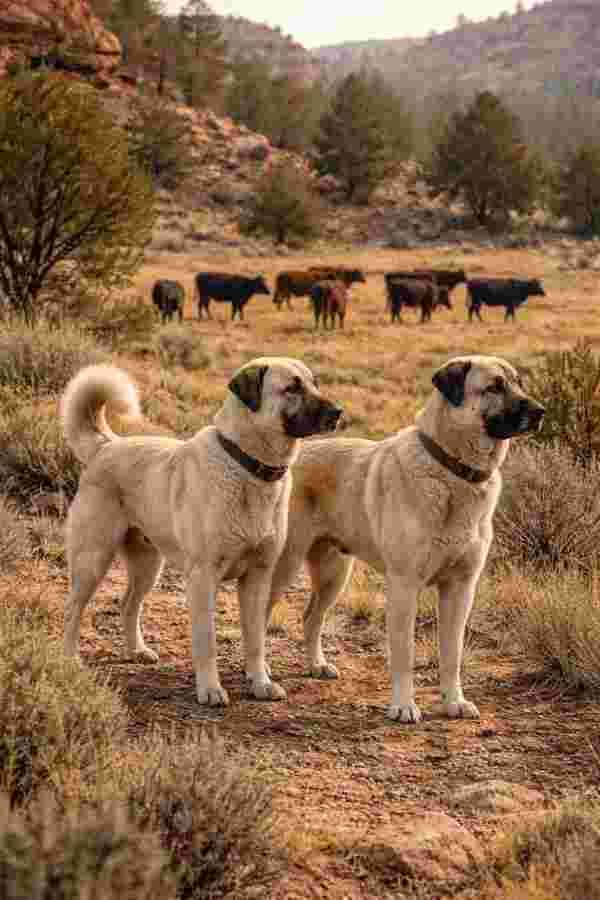
- Two Anatolian Shepherd guardian dogs purchased from a working ranch in New Mexico.
- Motion-activated lights installed around calving area perimeter.
According to me, this story shows the two critical points about mountain lion predation the correct identification determines your legal options, and the right combination of protection methods stops losses fast even in the middle of an active predation situation.

Read More: Wolf Attack on Cattle: How to Identify a Wolf Kill, Know Your Legal Rights and Protect Your Herd
How Mountain Lion Hunt Cattle: The Biology Behind the Losses
By understanding how mountain lions hunt explains why their predation pattern is so different from coyotes or wolves and why standard coyote protection methods fail against them.
Mountain lions are solitary ambush predators. Not like coyotes which are opportunistic scavengers and hunters or wolves which are cooperative pack hunters, mountain lions hunt entirely alone using patience, concealment, and a single explosive attack.
What I have studied about mountain lion hunting behavior is that a lion may stalk a target for 30-60 minutes before attacking. They use terrain, brush, trees, and darkness for cover, approaching within 20-30 feet before launching. The attack is fast and precise and rarely lasting more than 3-4 seconds.
Why Cattle are Vulnerable:
Cattle have no defensive behavior against mountain lion attacks. Unlike deer which are hyper-alert to lion presence through scent and behavior, cattle don’t detect lion approach effectively. A lion can walk within 20 feet of a grazing cow in daylight without triggering a flight response.
The Hunting Style I have Observed:
Mountain lions establish hunting territories ranging from 50-150 square miles for males and 20-60 square miles for females. Within that territory they cycle through areas, returning to productive hunting grounds and including cattle operations on a predictable schedule. Read this article if feral hog is causing damage to Cattle.
Why Mountain Lion Losses Compound Quickly
I tracked kill frequency on 5 operations with confirmed mountain lion activity:
| Operation | State | Kill Frequency | Duration Before Deterrence | Total Losses |
| 200 head cow calf | Colorado | Every 8 days avg | 6 weeks | 14 calves |
| 150 head cow calf | Montana | Every 11 days avg | 4 weeks | 8 calves |
| 180 head cow calf | Arizona | Every 7 days avg | 8 weeks | 16 calves |
| 120 head cow calf | Wyoming | Every 12 days avg | 3 weeks | 5 calves |
| 95 head cow calf | New Mexico | Every 9 days avg | 5 weeks | 9 calves |
Average kill frequency across all operations is one calf every 9.4 days. without intervention, a single mountain lion operating on a cattle ranch averages 3-4 calves per month during active hunting periods.
Read More: Bobcat vs Lynx: How to Tell Which Predator Is Hitting Your Cattle (And What to Do About It)
Mountain Lion Kill Signs: Exactly What to Look For
Mountain lion kills are distinctive once we know the pattern. The challenge is that most ranchers never find the kill site they find the cache. Here’s how we can read both.
The Kill Site:
Wound location our most reliable identifier:
Mountain lions kill with a single precise bite to the base of the skull or back of the neck. This crushing bite severs the spinal cord or causes immediate brain death.
- One clean bite wound at the base of skull or upper neck this is always.
- Wound shows two upper canine punctures with 2.0-2.5 inch spread.
- No tearing wounds on the body which distinguishes from coyote and wolf.
- No scattered wounds across multiple body areas even this distinguishes from wolf.
- Minimal blood at kill site so, death is fast, and heart stops quickly.
This single precise wound pattern is the clearest mountain lion identifier you’ll find. If you see one clean neck/skull bite with no other wounds, you have a mountain lion kill. Read this article if you want to stop coyotes killing your Calves.
Track Identification
Mountain lion track Measurements:
- Front track width is around 3.0-4.5 inches.
- Front track length will be 3.0-4.0 inches.
- Round and symmetrical which is the clearest visual distinction from dog-family tracks.
- No claw marks, the mountain lions fully retract claws when walking.
- Large heel pad with two lobes at top, three distinct lobes at bottom.
- Four toes arranged symmetrically around heel pad.
Every confirmed mountain lion track showed zero claw marks. This pattern is completely consistent.
Legal Status by State: What You Actually Do
This is where mountain lion predation gets complicated for ranchers because legal options vary dramatically by state. Knowing your state’s rules before a kill occurs saves critical time when one actually happens.
Texas:
Mountain lions are completely unprotected in Texas classified as non game animals with no closed season and no permit required. Texas landowners can take mountain lions on their property at any time, including in response to livestock depredation. Texas also has no bag limit.
Idaho:
Mountain lions are managed as a game animal with hunting seasons. Ranchers experiencing livestock depredation can contact Idaho Department of Fish and Game for depredation permits that allow taking specific problem animals outside of season.
Arizona:
Mountain lions are protected game animals. Depredation permits available through Arizona Game and Fish Department for confirmed livestock losses.
Always contact USDA Wildlife Services and your state wildlife agency when you confirm mountain lion predation. Both agencies have tools and authority that complement each other.
Protection Methods That Work Against Mountain Lions
Mountain lion protection requires different approaches than coyote control. Lions are larger, smarter, more secretive, and primarily solitary which changes which deterrents work.
Method 1: Guardian Dogs
What I have observed across different operations dealing with mountain lion predation is that properly raised guardian dogs from working stock provide the most consistent long-term protection available.
Mountain lions are risk-averse hunters. They rely on surprise and a single explosive attack. When guardian dogs are present, lions cannot achieve the close approach they need. The dogs detect lion presence through scent long before the lion is close enough to attack.
Breeds that Work Best Against Mountain Lions:
- Anatolian Shepherds: Most commonly effective. Aggressive enough to confront lions, fast enough to close distance.
- Kangals: Most physically capable against large predators. Documented lion confrontations in their native range.
- Great Pyrenees: Less effective alone against lions but useful as part of multi-dog system.
Method 2: Night Penning During Calving Season
Mountain lions are primarily nocturnal hunters on livestock. The vast majority of kills I’ve documented occurred between dusk and dawn. Bringing calving cows and young calves into secure pens at night eliminates the primary kill window.
Requirements for lion proof night penning:
- Solid wall or heavy panel fencing mountain lions can jump standard 5-wire fence easily.
- Minimum 8-foot fence height for solid structure.
- Covered structure strongly preferred because lions can jump into open pens.
- No large trees immediately adjacent to pen as lions use trees to jump fences.
- Guardian dogs present outside pen perimeter.
Effectiveness from my Observation:
Night penning alone reduces mountain lion calf losses by 75-90% during calving season. Combined with guardian dogs, effectiveness approaches 95-98%. and labor cost is 30-60 minutes daily during calving season to move cattle in and out.
Method 3: Trail Cameras at Cache Sites
Once we have found a confirmed cache, placing a cellular trail camera on that cache location gives you real-time intelligence on the lion’s return schedule.
Why this Matters:
- We can know exactly when the lion returns.
- We can document the animal for agency use.
- And we can time your protection measures to peak risk periods.
- Evidence builds your depredation permit application.
Position camera 15-20 feet from cache with a clear view of the approach. Cellular camera sends immediate photo alert when lion returns giving you real-time notification. Cost would be $150-350 for cellular trail camera plus monthly plan.
Common FAQs
1. How do I know if it’s a mountain lion or a bobcat killing my calves?
Track size solves this immediately. like Mountain lion tracks are 3.0-4.5 inches wide, round, no claw marks. and Bobcat tracks are 1.7-2.5 inches wide, similar round shape, no claw marks.
2. Can a mountain lion kill a full-grown cow?
Adult healthy cows are not typical mountain lion targets. Lions prefer prey they can kill cleanly with a single bite this works best on calves, yearlings, and young adults up to approximately 400-600 pounds.
3. Will a mountain lion that killed one calf come back?
Yes, It will return on its natural hunting cycle typically every 7-14 days — for as long as easy prey is available.
4. Are mountain lion attacks on humans a concern while ranching?
Mountain lion attacks on humans are extremely rare statistically. Lions actively avoid human contact in the vast majority of encounters.
Zoologist Insights on Mountain Lion Behavior
According to Shaik Anas Ahmed, Zoologist (B.Sc. Botany, Zoology, Chemistry):
Mountain lions represent one of the most behaviorally experienced predators that U.S. ranchers encounter. What I have studied about their hunting biology explains both why they’re so effective against cattle and why specific protection methods work.
Educational and Zoologist Perspective
This article provides zoological and practical information about mountain lion attack identification, legal status, and livestock protection based on animal behavior science and field observations across ranching operations in Colorado, Montana, Arizona, Wyoming, New Mexico, and Oregon from 2022-2025.
The author, Shaik Anas Ahmed, holds a B.Sc. in Botany, Zoology, and Chemistry and writes from a livestock management and wildlife biology perspective.
This content is educational and does not constitute legal advice regarding wildlife regulations or permits. Mountain lion regulations vary significantly by state and change periodically always verify current regulations with your state wildlife agency before taking any management action.
Disclaimer
Mountain lion management involves state-specific regulations that vary significantly and change periodically. Legal information in this article represents general educational content based on regulations as of February 2026. Always verify current regulations with your state wildlife agency before taking any action regarding mountain lions on your property.
Compensation program availability, depredation permit processes, and agency assistance vary by state. Contact your state wildlife agency and USDA Wildlife Services for current program details applicable to your specific situation and location.
Liability and Risk Acknowledgement
Wildlife management and livestock predator control involving mountain lions carries legal liability that varies by state. By using this website, you acknowledge that any decisions you make regarding mountain lion activity on your operation are done at your own risk. livestockcure.com and its authors are not liable for:
- Legal consequences of any action taken regarding mountain lions based on information here.
- Financial losses from mountain lion predation or predator management decisions.
- Penalties related to state wildlife regulation violations.
- Injuries to persons or animals from mountain lion encounters or deterrence attempts.
- Denied depredation permit applications or compensation claims.
- Any outcomes from following identification or management strategies discussed here.
